

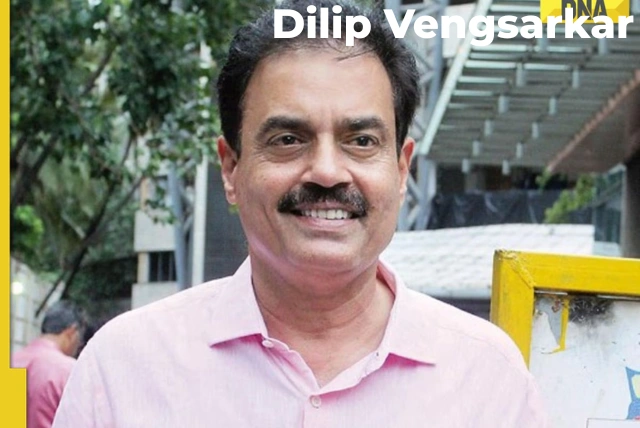
Dilip Vengsarkar is one of the most respected names in Indian cricket history. He was known for his elegant batting, calm behavior, and strong technique. In the late 1980s, he was ranked among the best batsmen in the world. At one point, he even reached the No.1 position in international batting rankings.
He is also remembered for scoring three Test centuries at Lord’s Cricket Ground in England — a rare achievement for any overseas player. He was part of India’s historic 1983 World Cup–winning squad and later served Indian cricket as Chairman of Selectors.
As of 2026, Dilip Vengsarkar net worth 2026 is estimated at around ₹40–42 crore (approximately $5 million). His wealth did not come from IPL contracts or heavy brand deals. Instead, it is the result of a long international career, cricket administration roles, academies, and careful financial planning.
This article covers his complete journey — from early struggles to world recognition and long-term financial stability.
Bio Table
| Full Name | Dilip Balwant Vengsarkar |
| Nickname | The Colonel |
| Date of Birth | 6 April 1956 |
| Age (2026) | 69 years |
| Birthplace | Rajapur, Maharashtra, India |
| Nationality | Indian |
| Height | 5 ft 8 in |
| Batting Style | Right-hand bat |
| Bowling Style | Right-arm medium |
| Playing Role | Top-order batter (No.3) |
| Teams | India, Mumbai, Staffordshire |
| Education | R.A. Podar College, Mumbai |
| Spouse | Manali Vengsarkar |
| Children | Nakul, Pallavi |
| Estimated Net Worth (2026) | ₹40–42 crore ($5 million approx.) |
Early Life – Rajapur to Mumbai
Dilip Vengsarkar was born in the small coastal town of Rajapur in Maharashtra. His family believed strongly in education, but their financial resources were limited. Cricket was his passion from a very young age.
After moving to Mumbai, he began playing school and college cricket seriously. Mumbai had a strong cricket culture. Competition was tough. But this helped him grow.
At R.A. Podar College, he made consistent runs in inter-college tournaments. Even though he had a slim body frame, his technique was solid. His cover drive later became his signature shot. Coaches quickly saw that he was not just talented but disciplined.
Turning Point – Irani Trophy 1975
In 1975, during the Irani Trophy match (Bombay vs Rest of India), he scored 110 runs against top Indian bowlers like Bishan Bedi and Erapalli Prasanna. On a difficult turning pitch, this century impressed selectors.
Soon after, he was selected for the Indian national team.
Early Struggles in Team India
He made his Test debut in 1976 against New Zealand. His early performances were average. Critics said he had talent but lacked big scores under pressure.
Instead of giving up, he worked harder:
- Improved his defense and back-foot play
- Focused on fitness
- Developed better shot selection
- Built mental strength
This phase became the foundation of his future success.
Career Rise – Australia Tour 1977–78
The 1977–78 tour of Australia changed his career. He performed well in tough conditions. After this series, he was given a permanent No.3 position in the Indian batting order.
For more than a decade, he became India’s most dependable top-order batsman.
Golden Phase (1985–1988)
The period from 1985 to 1988 was the peak of his career.
During this time:
- 8 centuries in 16 Tests
- 6 centuries against the powerful West Indies attack
- Three centuries at Lord’s (1979, 1982, 1986)
- Ranked World No.1 batsman (Coopers & Lybrand rating system)
Scoring centuries against fast bowlers like Malcolm Marshall, Michael Holding, Andy Roberts, and Joel Garner was not easy. Yet he performed consistently.
His three centuries at Lord’s remain one of the most special achievements by an overseas batsman.
World Cup & Leadership
Dilip Vengsarkar was part of the historic 1983 World Cup–winning Indian team under Kapil Dev. That victory changed Indian cricket forever.
He also played a key role in:
- 1985 World Championship of Cricket win
- 1988 Asia Cup victory as captain
After the 1987 World Cup, he became India’s captain. He led India in 10 Test matches.
However, captaincy was challenging. There were selection issues, team performance struggles, and administrative disagreements. In 1989, captaincy was taken away from him.
Even during tough times, he remained calm and professional.
Career Statistics – Numbers That Still Matter
| Format | Matches | Runs | Average | Centuries |
|---|---|---|---|---|
| Tests | 116 | 6,868 | 42.13 | 17 |
| ODIs | 129 | 3,508 | 34.73 | 1 |
| First-Class | 260 | 17,868 | 52.86 | 55 |
These numbers show long-term consistency. At retirement in 1992, he was India’s second-highest Test run scorer after Sunil Gavaskar.
Retirement & Administration Career
In 1992, due to injuries and form decline, he retired from international cricket.
After retirement, he stayed connected to cricket:
- Chairman of Selectors (BCCI, 2006–2008)
- Cricket Association advisory roles
- Chief Adviser to Cricket Association of Telangana
- Mentor to young players
His administrative role was important. He helped identify and support young talents who later became key Indian players.
Dilip Vengsarkar Net Worth 2026
As of 2026, Dilip Vengsarkar net worth 2026 is estimated at ₹40–42 crore (around $5 million).
Unlike modern cricketers, he did not earn from IPL contracts or heavy sponsorship deals. His wealth is built on:
- International cricket earnings (1976–1992)
- BCCI administrative salary
- Cricket academies in Mumbai and Pune
- Advisory and mentorship roles
- Long-term savings and investments
Experts describe his financial model as stable and low-risk.
Estimated Income Distribution
| Source | Estimated Contribution |
|---|---|
| Playing Career | ₹10 crore |
| Cricket Academies | ₹15 crore |
| BCCI/Admin Roles | ₹5 crore |
| Investments & Savings | ₹10+ crore |
His academies, especially the Elf-Vengsarkar Cricket Academy, play a major role in his present income.
Monthly Income (2026 Estimate)
His current estimated monthly income is ₹12–20 lakh.
This comes from:
- Academy operations
- Advisory contracts
- Guest appearances
- Investment returns
Income is stable but not aggressive.
Comparison with 1980s Cricket Legends (2026)
| Name | Role | Estimated Net Worth (2026) |
|---|---|---|
| Kapil Dev | All-rounder | ₹300+ crore |
| Sunil Gavaskar | Batsman | ₹250+ crore |
| Ravi Shastri | All-rounder/Commentator | ₹150+ crore |
| Dilip Vengsarkar | Batsman/Admin | ₹40+ crore |
Note: The 1980s era had limited commercial opportunities. Modern cricket offers larger financial platforms.
Personal Life – Balanced & Private
He married Manali Vengsarkar on 15 August 1981. She is a jewellery designer.
They have two children:
- Nakul Vengsarkar – Architect
- Pallavi Vengsarkar – Former model
Despite fame, he always preferred a simple and private life. He stayed away from media controversies.
Awards & Recognition
- Arjuna Award (1981)
- Padma Shri (1987)
- Wisden Cricketer of the Year (1987)
- C.K. Nayudu Lifetime Achievement Award
He was also portrayed in the 2021 film 83, based on India’s first World Cup win.
Social Media Presence
He keeps a low profile online.
- Instagram: Limited activity
- X (Twitter): Occasional cricket opinions
- Facebook: Low activity
He focuses more on real cricket development than online popularity.
Current Status (2026)
As of 2026, he is:
- Running cricket academies in Mumbai and Pune
- Mentoring young players
- Serving in advisory roles
- Participating in cricket workshops
He remains a respected voice in Indian cricket policy discussions.
Future Outlook (2027–2030)
His financial growth is expected to remain stable.
Projected net worth by 2030: ₹45–50 crore (estimated), depending on investment growth and academy expansion.
His wealth model remains:
- Low risk
- Reputation-driven
- Long-term cricket association
Conclusion
Dilip Vengsarkar’s journey is about discipline and steady growth. From Rajapur to becoming a world-class No.3 batsman, and later a respected administrator, he built not just records but trust.
When people search “Dilip Vengsarkar net worth 2026,” they are not just looking for a number. They are looking at the story of a player who succeeded in a time when cricket was not highly commercial.
His legacy remains strong. His financial stability shows that consistent planning and dedication can build lasting wealth.
Sources
- ESPNcricinfo Player Profile
- BCCI Official Archives
- Wisden Cricketers’ Almanack
Author Bio
People Fortune Editorial Team is a global financial journalism team that analyzes celebrity wealth, athlete earnings, and long-term financial growth. The team focuses on verified public data and conservative financial estimates to provide clear and reliable net worth insights.
Disclaimer
All net worth figures are estimates based on publicly available information. Actual financial details are private and may change over time. This content is for informational purposes only and does not represent financial advice.
FAQS
Q1. Who is Dilip Vengsarkar?
Dilip Vengsarkar is a former Indian cricketer and one of India’s best middle-order batsmen.
Q2. What is Dilip Vengsarkar’s age in 2026?
Dilip Vengsarkar is 70 years old in 2026. He was born on 6 April 1956.
Q3. What is Dilip Vengsarkar famous for?
He is famous for his batting skills and performances for India during the 1970s and 1980s.
Q4. What was Dilip Vengsarkar’s nickname?
He was popularly known as “Colonel.”
Q5. How many Test runs did Dilip Vengsarkar score?
He scored more than 6,800 runs in Test cricket for India.
Q6. Did Dilip Vengsarkar captain India?
Yes, he captained the Indian cricket team in both Tests and ODIs.
Q7. What is Dilip Vengsarkar’s net worth in 2026?
His estimated net worth in 2026 is around ₹20 crore to ₹30 crore.
Q8. Is Dilip Vengsarkar married?
Yes, Dilip Vengsarkar is married and has a family.
Q9. Which award did Dilip Vengsarkar receive?
He received the prestigious Padma Shri award from the Government of India.
Q10. What does Dilip Vengsarkar do now?
He is involved in cricket administration, commentary, and mentoring young players.
