
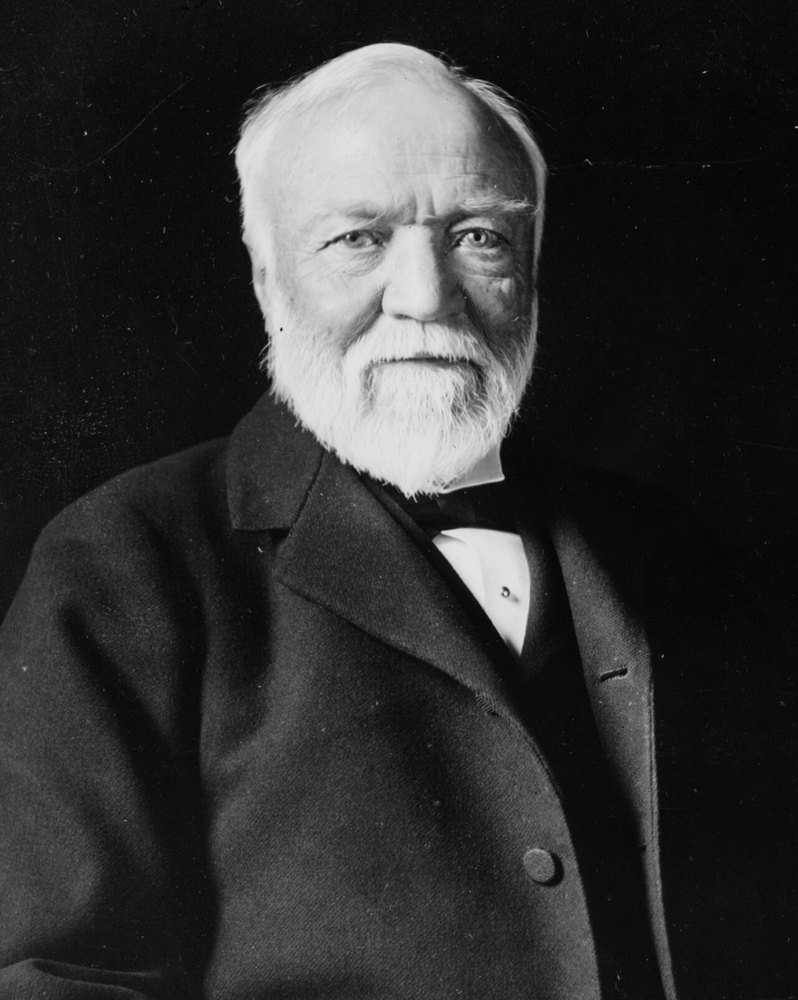
Andrew Carnegie: Founder of Carnegie Steel
Business Owner · Steel & Manufacturing
Andrew Carnegie arrived in Pittsburgh at 12, worked in a cotton mill, built Carnegie Steel and sold it to J.P. Morgan for $303 million in 1901, then gave away almost 90 percent of his fortune.
About Andrew Carnegie: Founder of Carnegie Steel
Andrew Carnegie (November 25, 1835 to August 11, 1919) was a Scottish-American industrialist and philanthropist who led the expansion of the American steel industry in the late nineteenth century and became one of the richest Americans in history. Born in Dunfermline, Scotland, he immigrated with his parents in 1848, at 12, to what is now Pittsburgh, Pennsylvania. He started work in a cotton mill and later worked as a telegrapher. By the 1860s he had investments in railroads, railroad sleeping cars, bridges and oil derricks, and he accumulated further wealth as a bond salesman raising money for American enterprise in Europe. He built Pittsburgh's Carnegie Steel Company, which he sold to J. P. Morgan in 1901 for $303,450,000; it formed the basis of the U.S. Steel Corporation. After the sale he surpassed John D. Rockefeller as the richest American of the time and devoted the rest of his life to philanthropy. In the last 18 years of his life he gave away around $350 million, equivalent to $6.9 billion in 2025 dollars and almost 90 percent of his fortune, to charities, foundations and universities. His 1889 article "The Gospel of Wealth" called on the rich to use their wealth to improve society, supported progressive taxation and an estate tax, and stimulated a wave of philanthropy in the United States, Great Britain and the British Empire. Sources: English Wikipedia (Andrew Carnegie, accessed September 2026).
Basic Information
Founder, Carnegie Steel Company (1835-1919)
Company Details
Carnegie Steel Company (U.S. Steel)
Steel Manufacturing, Philanthropy
Related Business Owner


Latest Articles

Alana Evans Net Worth in 2026 – Income Sources, Career & Earnings

Amy Lee Net Worth 2026: Income Sources, Evanescence Career & Personal Life

Abz Love Net Worth 2026: Five Star’s Career, TV Comeback & Income Breakdown