
Portkey
Verified CompanyThe production stack for Gen AI builders — now the Prisma AIRS AI Gateway
Two engineers in Bengaluru got tired of rebuilding the same plumbing for every AI app, so they built it once and sold it to everyone. Three years and $18 million later, Palo Alto Networks bought the company.
About Portkey
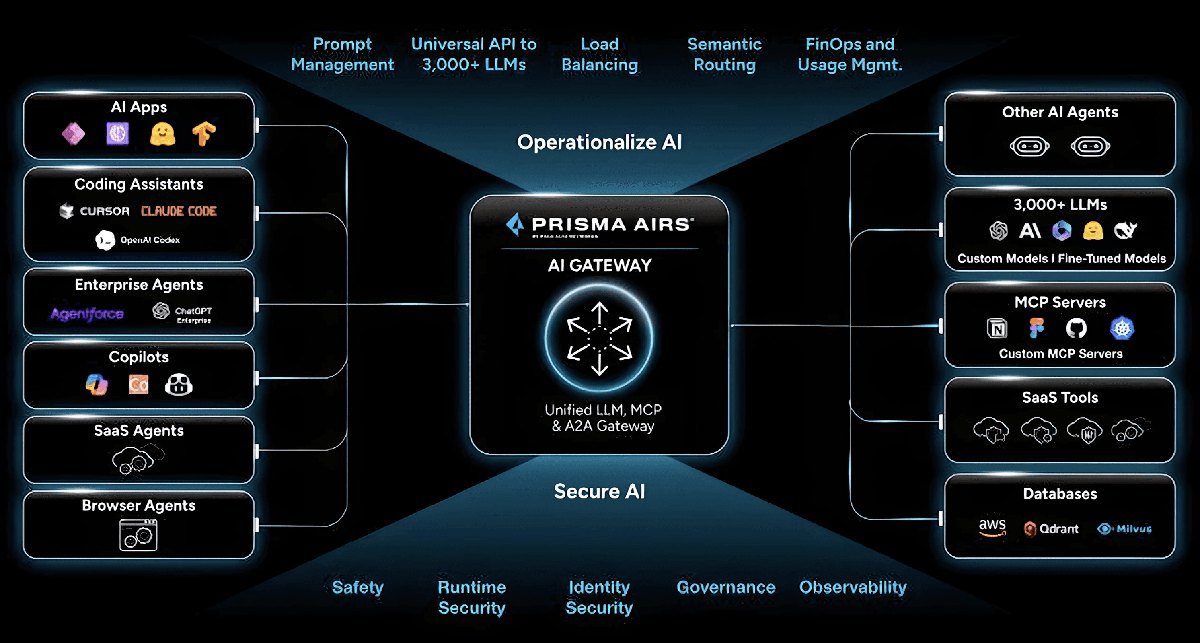
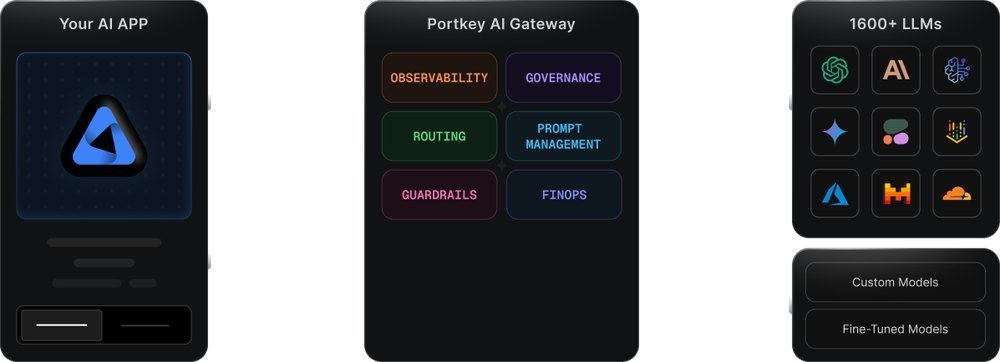
Every team building on large language models ends up writing the same unglamorous code: retry logic when a model times out, a fallback when a provider goes down, caching so you stop paying for identical requests, logs so somebody can work out what the model actually said, and some way of stopping a junior engineer's experiment from quietly costing forty thousand dollars. Rohit Agarwal and Ayush Garg hit all of that while building AI products, worked out that everyone else was hitting it too, and in January 2023 started a company in Bengaluru to build it once. Portkey launched publicly that April. What they built is an AI gateway — a single API endpoint that sits between an application and every model it might call. Portkey routes requests across more than 1,600 models, falls back automatically when one fails, balances load across providers, caches repeated calls, and records everything that passes through. Around that gateway sit four more layers: observability for monitoring model behaviour and catching anomalies, guardrails, prompt management, and AI governance with role-based access control and organisation-wide audit logs. The scale it reached in under three years is the striking part. Inc42 reported the company processing more than 500 billion tokens across 125 million requests a day, managing over $500,000 of daily AI spending across 24,000 enterprise accounts. Its own site describes powering more than 3,000 GenAI teams; its open-source gateway has passed 10,000 stars on GitHub, with a developer community of around 2,000. The funding tracked the growth. Five months after launch it raised a $3 million seed round led by Lightspeed Venture Partners, with angel investors from AWS, OpenAI, Cloudflare, Postman and Asana — the kind of cap table that tells you the customers were also the believers. In February 2026 it raised a $15 million Series A led by Elevation Capital. Then, three months later, it was bought. Palo Alto Networks announced its intent to acquire Portkey on 30 April 2026 and completed the deal on 29 May. The financial terms were not disclosed; press estimates varied widely enough that none of them should be treated as fact. The strategic logic was clear: as enterprises deploy autonomous AI agents, something has to sit in the middle and watch every call those agents make. Portkey already was that thing, at low enough latency for agent-to-agent traffic. It now runs as the AI Gateway inside Prisma AIRS, Palo Alto's AI security platform, and is generally available to enterprise customers under that name. For an Indian software company founded in January 2023, that is a three-and-a-half-year path from two engineers with an annoyance to core infrastructure inside one of the largest cybersecurity companies in the world. Sources: portkey.ai (product description, scale figures, GitHub and community numbers, and the Prisma AIRS transition, accessed August 2026); Palo Alto Networks press releases dated 30 April and 29 May 2026; funding, founder and usage figures as reported by Inc42 and Analytics India Magazine. Images: Portkey, reproduced from the company's own website for identification.
Our Services
AI Gateway — One Endpoint, 1,600+ Models
The core product: a single API that routes requests to any supported model, with automatic fallbacks when a provider fails, load balancing across providers, and caching so identical requests are not paid for twice. Swapping models becomes a configuration change rather than a rewrite.
Observability
A real-time dashboard for what the models are actually doing — latency, cost, token usage, error rates and anomalous behaviour — so teams can see problems before the bill or the user does.
Guardrails
Programmable checks on inputs and outputs, applied at the gateway rather than inside each application, so policy is enforced once for every team and every model in the organisation.
AI Governance and Access Control
Role-based access control, organisation-wide audit logs, budget limits and centralised key management — the layer that lets a company give hundreds of engineers access to frontier models without losing track of spend or data.
Prompt Management
Versioned prompts managed outside application code, so prompts can be edited, tested and rolled back without a deployment — treating them as configuration rather than as source.
Prisma AIRS AI Gateway
Since the Palo Alto Networks acquisition completed in May 2026, Portkey operates as the AI Gateway inside Prisma AIRS, monitoring, routing and securing AI transactions for enterprises deploying autonomous agents. It is generally available under that name.
Key Highlights
Our Portfolio
AI Gateway

Observability Suite
Guardrails & Governance

Prompt Management
Our Clients
Certifications & Partnerships
Recent News & Announcements
Palo Alto Networks completes its acquisition of Portkey; the gateway becomes the AI Gateway inside Prisma AIRS

Palo Alto Networks announces its intent to acquire Portkey to secure the rise of autonomous AI agents
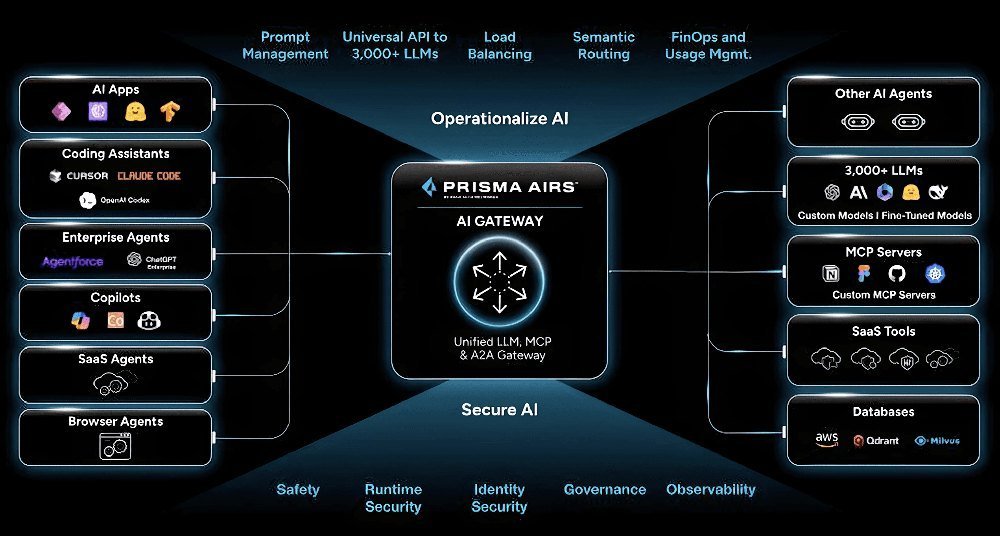
Portkey raises a $15 million Series A led by Elevation Capital to help enterprises manage AI spending


Latest Articles

Alana Evans Net Worth in 2026 – Income Sources, Career & Earnings

Amy Lee Net Worth 2026: Income Sources, Evanescence Career & Personal Life

Abz Love Net Worth 2026: Five Star’s Career, TV Comeback & Income Breakdown